Team
Three questions to bright minds of excellent research. Our interdisciplinary team at the Center for Inter-American Studies provides an insight behind the scenes.
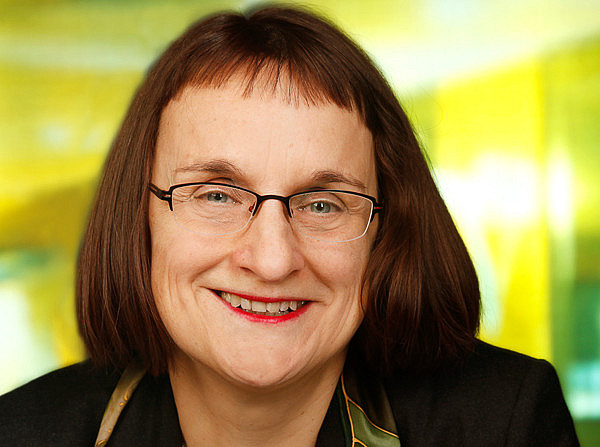
Roberta Maierhofer
Director of the Center for Inter-American Studies
1. Can you give us a more detailed insight into your role as head of the Center for Inter-American Studies?
As the head of a university unit such as CIAS, you are subject to structural and content-related hierarchies that demand specifications, define tasks, set deadlines and schedules, determine strategic priorities and thus also significantly determine the creative freedom of a unit. Nevertheless, it is possible to work together as a team to set priorities in research and teaching, plan projects and shape the center as an interdisciplinary academic institution. If one perceives the position of such a director as the management of joint design, then it is a matter of recognizing and sounding out opportunities for creative participation and co-design within the larger framework of an academic institution and implementing them as a team within the narrowly defined guidelines of a university-administrative operation. It is a joint effort by all that makes successful academic work possible in the first place. A high administrative burden does not always make it possible to implement creative approaches and innovative ideas, but - to borrow a famous quote - "Do or do not. There is no try."
2. To what extent does your many years of experience as director of the Center shape your approach to interdisciplinary issues, particularly in the field of (inter)-American literary and cultural studies and gender studies?
Academic engagement has two tasks that are often at odds with each other. On the one hand, it is about archiving knowledge, preserving what has already been researched, historically recognizing the shoulders of others on which we stand, and passing on knowledge to future generations. On the other hand, science is also the questioning of existing knowledge, of the foundations of the status quo, and the pushing of boundaries in order to discover new things and anchor these innovative findings scientifically. Since science is always also a classification of what already exists, new questions are important in order to overcome problems that arise. In this sense, it is not about isolated answers, but about integrating new approaches into existing disciplines in order to update them. Sometimes these new approaches also lead to new scientific structures. For example, my work in the field of ageing studies since the 1990s has led to the founding of a new center; American Studies, which was established before my time in the 1970s, contributed to the founding of CIAS. In this sense, my experience allows me to understand scholarship as a process that builds on existing knowledge while transforming it through research, which is particularly evident in the work in the newly established field of Inter-American Studies.
3. what initiatives and programs have you introduced as director of the Center to promote transatlantic educational cooperation, and how do these contribute to intercultural understanding?
Based on an understanding of the continent of the Americas in its cultural, historical, social and political entanglements and its Americanness, we at the Center for Inter-American Studies are concerned precisely with the analysis of what is common and what is different from a spatio-temporal perspective. With a focus on research collaborations and interdisciplinary research projects, we offer CIAS as a platform for scholarly encounters that allow us to address the challenges of our time together with others in a global context and to impart the knowledge generated to our students so that they can then take up and continue the task as their own. Examples of such meeting platforms include the Graz International Summer School Seggau, our program with the University of Pittsburgh on Comparative Healthcare or our EU projects on Eco-Storytelling for Building a Climate-Just Future, where important research questions are posed and intercultural cooperation is practiced.
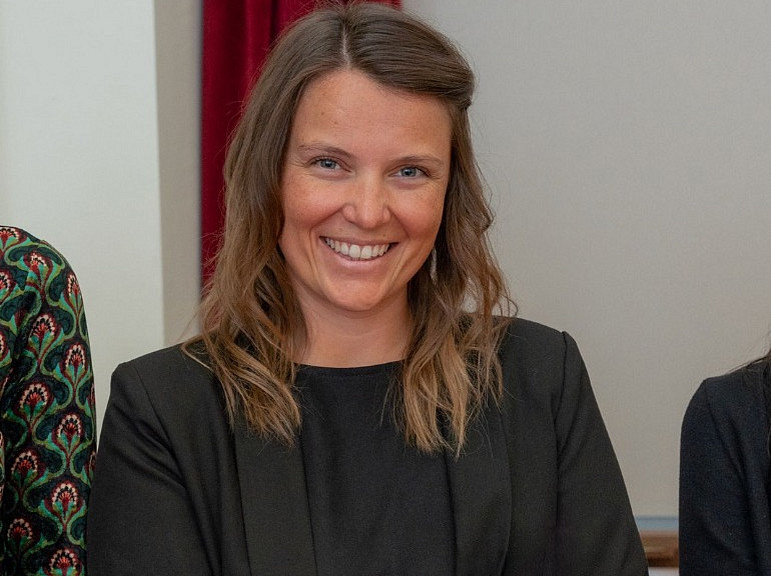
Nicole Haring
1. You have recently completed your doctorate. Could you give us an insight into your current research projects at the Center for Inter-American Studies and how these projects contribute to your field in Inter-American Literature, Feminist Theory and Gender and Aging Studies?
I am currently involved in two research projects. On the one hand, I am an active researcher in the Erasmus+ project "EcoStories", where we are working on issues of climate justice from a critical intersectional perspective and narrative and creative method development for English language acquisition. To this end, we draw on current research approaches from intersectional climate research, eco-criticism, multilingualism and CLILL. In order to realize this interdisciplinary and international project, we will collaborate for three years with the University Ca'Foscari of Venice (Italy) and the University of Malaga (Spain), as well as three schools in Italy, Spain and Austria.
The second research project I have been working on since 2021 deals with the topic of imprisonment, camps and human rights in the Americas. In 2022, I organized a large international conference here together with Ao. Prof. Roberta Maierhofer and Prof. Don Walicek (University of Puerto Rico). My research in this area is primarily concerned with feminist theories of abolitionism and inter-American and intersectional approaches to the conception and cultural representation of incarceration and the prison state in the Americas.
2. how has your experience earning your PhD influenced your perspective and approach to research projects, particularly with regard to your interdisciplinary interests and engagement in the fields of gender and aging studies?
Through my interdisciplinary doctoral project, I was able to broaden my own academic horizons and test the boundaries of disciplines and also blur them through my feminist research approach. International projects at the Center for Inter-American Studies, such as the ACT project, Aging in Data, or the Graz International Summer School have made a significant contribution to this progress in my work. The development of methods based on Inter-American approaches and theories has enabled me to negotiate critical theories in local contexts. This is exactly what speaks for the work of the Center for Inter-American Studies, which can advance our research today in an interdisciplinary and international way.
3. what concrete steps are you planning in your future research activities at the Center for Inter-American Studies?
The next concrete steps are the publication of my dissertation as a monograph with Transcript Bielefeld (end of 2024), as well as the organization of the international conference "Camps, Carceral Imaginaries, and Critical Interventions" from May 30 to June 2, 2024 at the University of Graz. This conference will again offer opportunities for international cooperation and follow-up projects, which I am already very much looking forward to.