Event Reports
Full list of events, publications, and projects
C.IAS Report 2025
Wintersemester 2025/26
C.IAS Lecture Series
Winter Semester 2025/26
November 5
Carolyn Defrin: “By Sea and by Land: Mapping European and American Borderscapes Through Art”
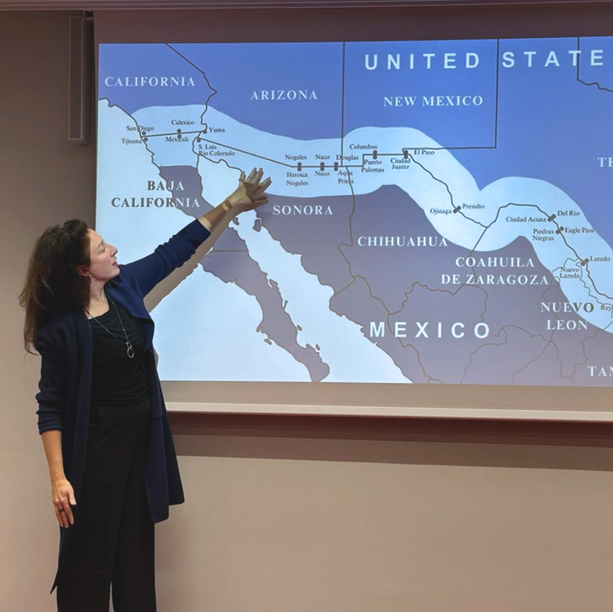
Carolyn Defrin from the University of Graz gave a talk titled “By Sea and by Land: Mapping European and American Borderscapes through Art.” Defrin shared early research findings on art in the context of borders, based on a recent research trip along the US/Mexico border, during which she visited museums and community arts initiatives. She compared these findings on how art responds to borders with a current project based in Samos, Greece, and Tenerife, Spain, exploring how art can shape social relationships between key border actors. As part of the lecture, students participated in interactive arts methods to explore how creative mapping of temporalities could lead to future imaginings of migration and borders.
November 12
Julia Roth: “Becoming Ruthless: Toward a Cultural Reading of Law”
Julia Roth from the Center for Inter-American Studies at the University of Bielefeld shared her research on legal imaginaries as reflected in literary and cultural works, highlighting their role in fostering a critical analysis of law and justice. In her talk, she provided insights into the relationships and overlaps between society and law. Roth also discussed current political discourses and questions of justice and (human) rights, particularly in the contexts of migration, gender, reproduction, and queerness. The discussion following the talk focused on the performative aspects of justice, as well as the cultural (re)productions and representations of legal discourse in social media.
December 9
Yasemin Besen-Cassino: “Serving up Politics: Effects of Political Polarization on Service Sector Workers in the United States”
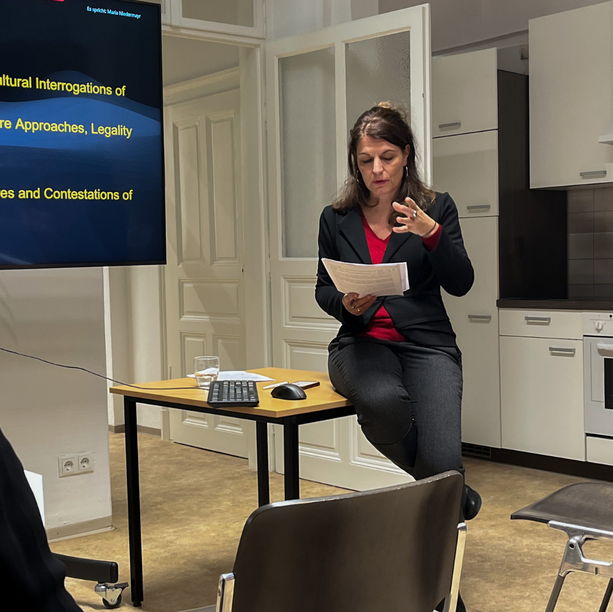
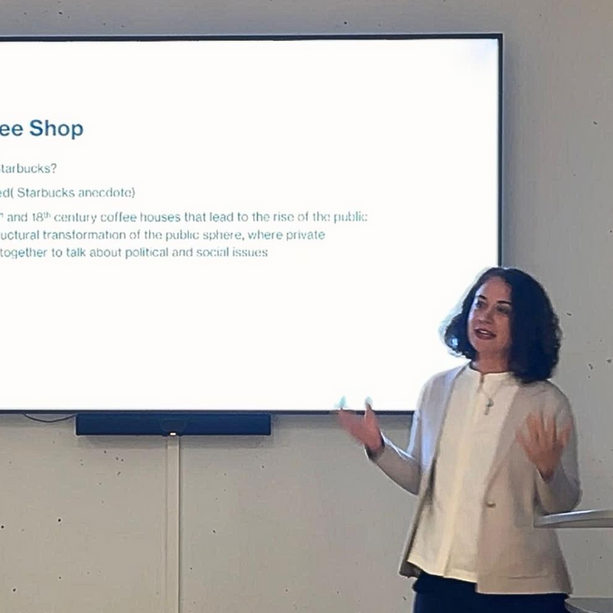
The Americas cluster HuK Forum lecture was delivered by Yasemin Besen-Cassino (Montclair State University) on Effects of Political Polarization on Service Sector Workers in the United States on December 9. The lecture focused on political polarization in the United States of America as it has unfolded in retail and service sector workplaces. The talk reported on how service sector workers have experienced harassment and violence in connection with politicized issues that intensified during election years. The cases discussed centered on four main topics: Pride Month displays, narratives and symbols related to the Black Lives Matter movement, attitudes toward people experiencing homelessness, and disputes surrounding public health rules during the COVID-19 pandemic.
GITS Kickoff Event and Lecture
Ruth Wodak: "'Driving on the Right': Analyzing Far-right Rhetoric"
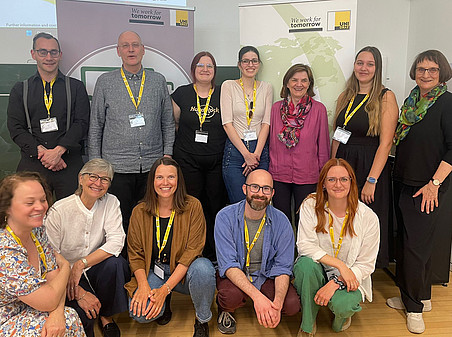
Since March 2025, the Center for Inter-American Studies (C.IAS) and the Centre for South East European Studies (CSEES) have become part of an umbrella institution called the Graz School of Interdisciplinary Transnational Studies (GITS). The official launch of GITS was held on December 1 at the University of Graz and was attended by staff members, colleagues, and students of the university.
The launch was followed by the lecture “Driving on the Right: Analyzing Far-Right Rhetoric” by Ruth Wodak. In the lecture, Wodak spoke on how far-right actors had shifted previously taboo language into mainstream politics and described discursive strategies such as provocation, denial, victim–perpetrator reversal, and the framing of migrants as security and welfare threats. She also addressed the emergence of a “new normal” in public discourse after the COVID-19 pandemic. The lecture was followed by student questions which addressed gender representation and the role of gender in far-right movements. The event concluded with a reception hosted by GITS for all participants.


C.IAS Spotlight Talk
The Center for Inter-American Studies launched the C.IAS Spotlight Talks, a new series of monthly lectures aimed at shedding light on pressing sociocultural topics in the Americas. For the first round of the series, we invited Anita Krainer and Johannes Waldmüller, who delivered a joint lecture titled “Inter-Culturality under Threat: An Analysis of Repression and the Constitutional Reform in Ecuador.” The lecture explored interculturality as a key principle of coexistence rooted in Indigenous relational territoriality. The speakers examined Ecuador’s current political situation and reflected on the country’s sociopolitical trajectory, focusing on state responses in relation to intercultural governance, rights, and policy development. They traced the origins of Ecuadorian interculturality back to the streets and the demands of Indigenous and popular movements of the 1990s, highlighting the grassroots activism that shaped the country’s legal and social landscape. The lecture also addressed contemporary developments, noting that planned constitutional reforms and the current sociopolitical climate have raised urgent questions about the future of interculturality in Ecuador.
CEEPUS Conference and Network Meeting
"Inter-American Perspectives of Environmental Entanglements: Literatures, Cultures, and Histories"
This year’s CEEPUS Week welcomed European scholars from the Inter-American Studies CEEPUS Network to explore the theme “Inter-American Perspectives of Environmental Entanglements: Literatures, Cultures, and Histories.” Researchers from Croatia, the Czech Republic, Hungary, Kosovo, North Macedonia, Serbia, Slovakia, and Slovenia presented their work on literature, culture, and history in the context of Inter-American studies.
Speakers and Presentations (in order of appearance):
Mirna Radin-Sabadoš (University of Novi Sad)
“The Expanse as a Narrative of the Anthropocene: Environmental Transformation and Political Conflict in a Universe Driven by ‘Progress’”István Pásztori-Kupán (Károli Gáspár University)
“The Landman Paradox: Is Global Energy Trade the Friend or Enemy of Global Environmental Protection?”David Livingstone (Palacky University)
“‘God Bless the Grass’: The Environmental Songs of Malvina Reynolds”Bea Tomšič Amon (Ljubljana University)
“The comic as an inclusive way of expression – The Eternaut”Milan Damjanoski (Blazhe Koneski, Ss. Cyril and Methodius University Skopje) “Romantic Roots and Transcendental Branches: Literary Origins of Environmental Consciousness”
Réka M. Cristian (University of Szeged)
“Inter-American Perspectives of Environmental Entanglements in the US of the Sixties”Jelena Šesnić (University of Zagreb)
“Images of Nature in H.D. Thoreou’s Walden (and “Walking”) and Margaret Fuller’s Summer on the Lakes”Mónika Fodor (University of Pécs)
“Environmental perception and imagination in Joy Harjo’s poetry”Alena Smiešková (Comenius University Bratislava)
“I Am Another You: Ecological Ontology and Hybrid Identity in Reyes and Cisneros”Fatmir Ramadani (AAB College)
“Evolving Representations of Racial Prejudice and Discrimination in American Literature: From Twain to Angelou”
SYMPOSIUM: Age and Gender in the Humanities and Social Sciences
dedicated to Roberta Maierhofer
On October 17, 2025 the symposium “Age and Gender in the Humanities and Social Sciences” was held in honor of Roberta Maierhofer and her scholarship in aging studies.
The celebration started with welcome remarks by Nicole Haring (Organizer, University of Graz), Florian Bieber (Director of the Graz School of Interdisciplinary Transnational Studies, University of Graz) and Sarah Zapusek (Coordination Centre for Gender Studies and Equal Opportunities, University of Graz).
Heike Hartung (University of Potsdam, Germany) and Nicole Haring (University of Graz, Austria) introduced and discussed Roberta Maierhofer’s scholarship in aging studies.
The first panel “Queering Age” was moderated by Elfi Bettinger (Free University Berlin, Germany) and featured presentations by Núria Casado-Gual (University of Lleida, Spain, online), José Armengol (University of Castilla-La Mancha, Spain), and Dovrat Harel (Bar-Ilan University, Israel, online).
After a short lunch break, the Round Table “Aging Studies: Contested Territories in Times of Crisis” was moderated by Barbara Zach (ÖAG, Austria) and featured Aagje Swinnen (Maastricht University, Netherlands, online) discussing the development of ENAS, along with panelists Ros Jennings (University of Gloucestershire, UK), Kim Sawchuk (Concordia University, Canada, online), Linn Sandberg (Södertörn University, Sweden, online), and Roberta Maierhofer.
The round table was followed by an online intervention featuring Julia Henderson (Chair of NANAS, University of Britisch Columbia, Canada), a personal account by Peg Cruikshank (University of Maine, USA), followed by Kate de Meideiros (Concordia University, Canada) and Tom Cole (UTHealth Houston, USA).
The final panel “Aging Mentorship, and the Life-Course” moderated by Marta Corezo Moreno (UNED, Spain) welcomed Hernando Gómez Prada (University of Murcia, Spain) and Steve Rabitsch (University of Oslo, Norway). Oana Hergentröther (University of Graz, Austria) closed this panel by personal stories and annecdotes with Roberta.
All photos taken at the event can be found here, the full Program below and Book of Abstracts here for download.
Welcome Remarks
Nicole Haring (Organizer, University of Graz)
Florian Bieber (Director of the Graz School of Interdisciplinary Transnational Studies)
Gender and Age: Maierhofer’s Scholarship in Aging Studies Revisited
Heike Hartung (University of Potsdam, Germany)
Nicole Haring (University of Graz, Austria)
Queering Age
Moderator: Elfi Bettinger (Free University Berlin, Germany)
Exploring the Epic of Older Women’s Lives
Núria Casado-Gual (University of Lleida, Spain)
Queer Temporalities in Contemporary Spanish Cinema and TV Series
José Armengol (University of Castilla-La Mancha, Spain)
“To love, to create, to express, to live” – A Typology of Aging Poems by Older Men
Dovrat Harel, Liat Ayalon (Bar-Ilan University, Israel)
Round Table: Aging Studies: Contested Territories in Times of Crisis
Moderator: Barbara Zach (ÖAG, Austria)
Aagje Swinnen (Maastricht University, Netherlands): Development of ENAS
Panelists: Ros Jennings (Gloucestershire University, UK), Kim Sawchuk (Concordia University, Canada), Linn Sandberg (Södertörn University, Sweden) and Roberta Maierhofer (University of Graz, Austria)
Online Interventions: North American Network of Aging Studies
Development of NANAS
Julia Henderson (Chair of NANAS, University of British Columbia, Canada)
Recollections of Roberta, a Wonderful Friend
Peg Cruikshank (University of Maine, USA)
Anocriticsm and the Performance of Masculinity in Interviews with Older Men
Kate de Medeiros (Concordia University, Canada)
Cultural Spiritual Renewal
Tom Cole (UTHealth Houston, USA)
Aging, Mentorship, and the Life-Course
Moderator: Marta Corezo Moreno (UNED, Spain)
Aging at the Margins: Older Transgender Women, Sex Work, and the Gendered Exclusion in Spain
Hernando Gómez Prada (University of Murcia, Spain)
¡Los vaqueros auténticos!: A worlding appreciation of a hemispheric icon
Steve Rabitsch (University of Oslo, Norway)
Metaphors and Sayings
Oana Hergenröther (University of Graz, Austria)


Tage des indigenen Widerstands / Days of Indigenous Resistance
The Indigenous Rights Collective Austria organized the Days of Indigenous Resistance and invited the public to explore new perspectives on the history and contemporary realities of Indigenous communities. Participants attended a diverse on-site program featuring guests closely connected to Indigenous traditions. On October 9, the Center for Inter-American Studies, one of the event sponsors, hosted participants on the second day of the Days of Indigenous Resistance. The program that day included three book presentations and four short films screening.
César A. Alcedo introduced “Takilka” as a music education method rooted in pre-Hispanic semiotics that combined music theory with foundational Andean ancestral symbols such as the Chakana and Wiphala. During the presentation, Alcedo outlined the development of the method, which built on his grandfather’s earlier work and included revisions, updates, and conceptual expansions led by Alcedo himself.
Alexander Buschenreiter presented readings from his two books on Hopi culture, including their spiritual concepts of the creation of Earth and humanity, as well as prophecies and warnings regarding environmental destruction.
Rita Eloranta gave a talk titled “Mochica: Grammatical Topics and External Relations”, offering an introduction to the extinct Mochica Language. She explained how grammar reflected the cosmovision of its former speakers and presented insights from language contact studies. She also introduced “Apeñ Muchik”, her revitalization initiative under the project name Apeñ Muchik, which aimed to support the revival of the Mochica language.
The evening concluded with a screening of short films created by the Escuela de Cine Amazónico. The films reflected on Amazonian communities’ deep connection to their land and addressed themes such as cultural heritage protection, climate justice, and ecological respect.


Semester Kick-Off and Lunch Lecture
On Tuesday, October 7 our center held a kick-off event for students, informing them about opportunities for our certificate and the GUSEGG Summer School.
After a short lunch break, Saskia Fürst gave a guest lecture on "Challenging Human Rights Violations and Racism in The Bahams: Haitian Mobility Narratives in Kareem Mortimer's Cargo and Edwidge Danticat's Krik?Krak!"
Her introduction discussed the historical and contemporary relations between Bahamians and Haitians, particularly in the context of migration and the colonial legacy of racial stereotyping. She illustrated how these relations are represented in cultural/popular media, exemplified by the short story "Children of the Sea" by Edwidge Danticat and the film Cargo by Kareem Mortimer.
The interview with Saskia Fürst can be found here.
C.IAS Lecture Series
During the summer semester 2025 as part of our C.IAS lecture series, we welcomed a number of speakers in Graz and online, primarily focusing on the current US-political climate but also including reflections on the foreign relations between the US and Europe.
April 2
Lonnie Johnson: “Getting to know the United States after 1945 - Exemplary U.S. ‘exchange of persons’ programs in postwar Austria: Fulbright and Smith-Mundt”
The lecture focused on the history and evolution of U.S. exchange programs, specifically the Fulbright and the lesser-known Smith-Mundt programs, and their impact on postwar Austria. It traced how these initiatives emerged in the aftermath of World War II, during the U.S. occupation of Austria (1945–1955), as tools of soft power intended to foster mutual understanding and counter lingering anti-American sentiment rooted in Austria’s historical, cultural, and ideological biases. The lecture highlighted how these "exchanges of persons"—from students and scholars to journalists and jazz musicians—not only introduced Austrian elites to American society but also had lasting influence on Austrian-American relations.
April 7
Elizabeth Dillenburg: “Empire's Daughters: Girls and Britain's Colonial Past”
The lecture elabortate on the interconnected histories of girlhood, whiteness, and British colonialism in the late nineteenth and early twentieth centuries. It highlighted how, although girls are often overlooked in studies of colonialism, they nevertheless played a vital role in the empire as migrants, settlers, laborers, and creators of colonial knowledge and were heralded as “empire builders.” To examine the complexities of girls' engagement and experiences in the empire, this presentation specifically discussed the Girls' Friendly Society and explored how the Society's multifaceted emigration and imperial education programs constructed ideas of girlhood, race, and empire that then circulated globally. This presentation used the Girls' Friendly Society as a lens to explore the micropolitics of colonialism and argued that understandings of colonialism remain incomplete without considerations of girls and girlhood.
May 7
James Forsher: “Democracy in Times of Change: Has Donald Trump Changed the Furture of American Society?”
The lecture considered the century-long history of right-wing political movements in the United States and in how far these movements foreshadowed the political events of today.
May 28
Benjamin Nienass: “Grief and Political Transformation”
The lecture reflected on the connections of grief and politics, specifically on the role of public mourning in sustaining and confronting ideologies. Drawing on different conceptualizations of public grief, the talk considered temporal registers, melancholic attachments to the past as well as narratives of “overcoming” and progress.
June 5
Manfred Berg: “Donald Trump and the Crisis of American Democracy”
The lecture provided an analysis of Trump's rise to power and his successful re-election. It discussed the potential consequences for US-American democracy and the recent governing of Trump and his administration. Berg argued that Trump's second term will be a stress test for the checks and balances of the US-American consitutional order.
SYMPOSIUM: Eco-Criticism and Democracy
Inter-American Perspectives
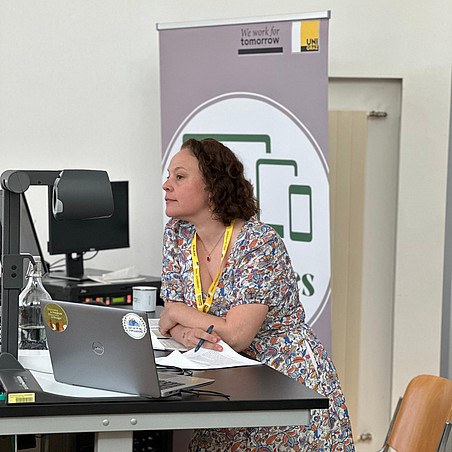
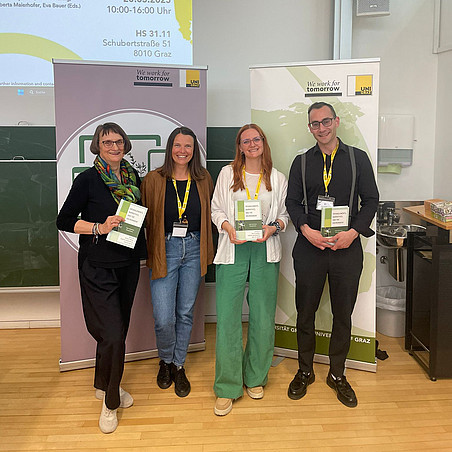
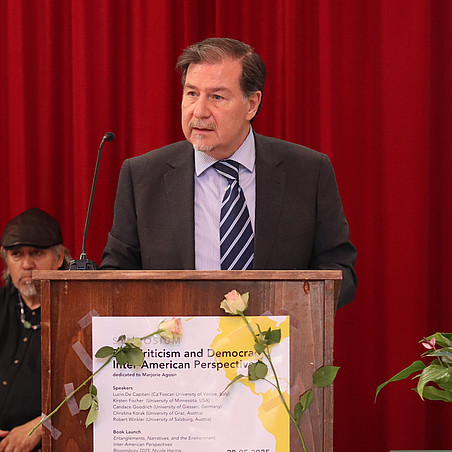
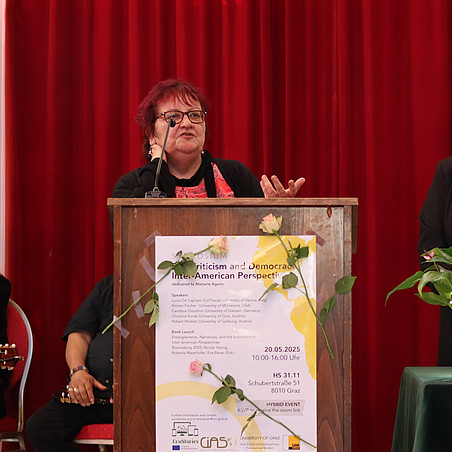
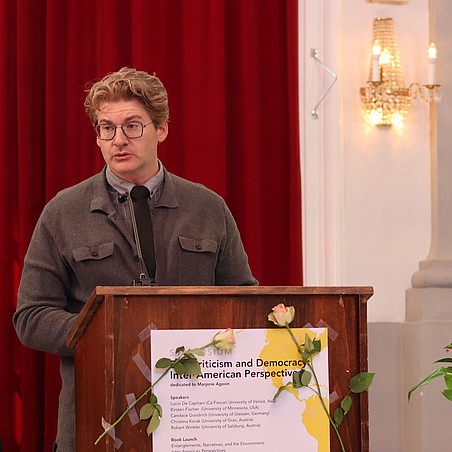
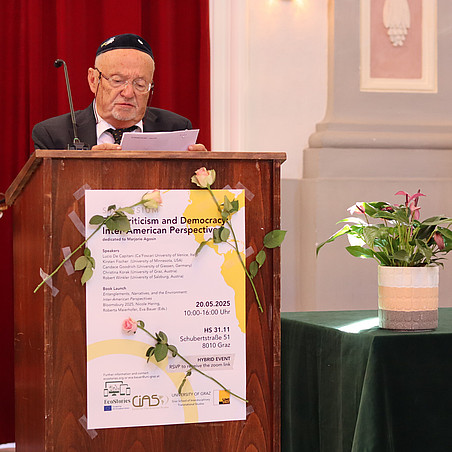
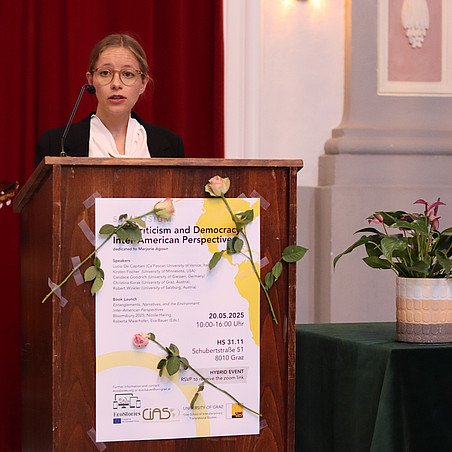
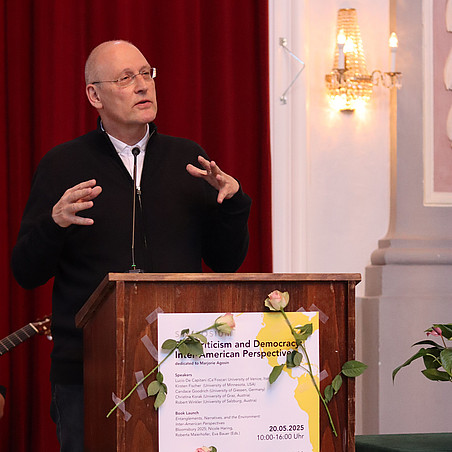
Following the recent publication of our edited volume “Entanglements, Narratives, and the Environment: Inter-American Perspectives”, we were pleased to host a symposium and book presentation titled Eco-Criticism and Democracy: Inter-American Perspectives at the University of Graz yesterday.
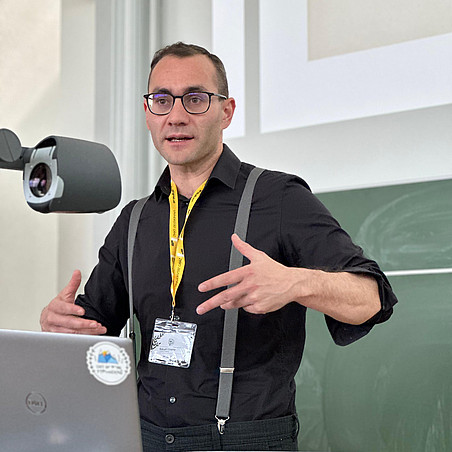
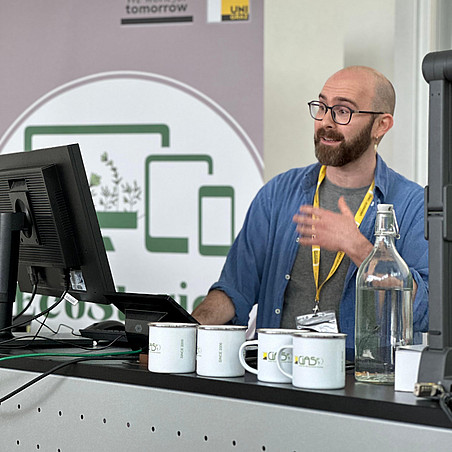
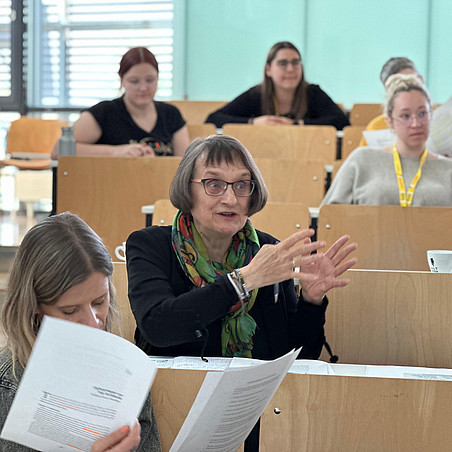
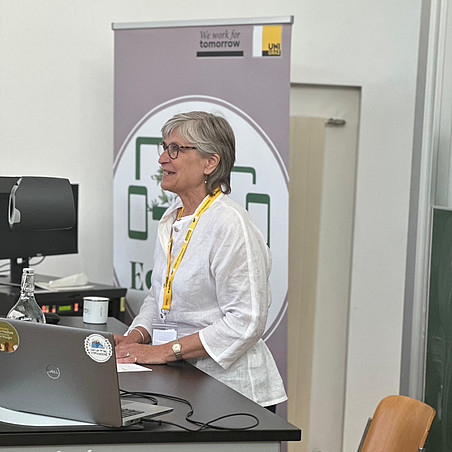
The event brought together scholars from across the Environmental Humanities, including Lucio De Capitani (Ca’ Foscari University of Venice), Kirsten Fischer (University of Minnesota), Candace Goodrich (University of Giessen), Christina Korak (University of Graz), and Robert Winkler (University of Salzburg). Their presentations offered valuable insights into the intersections of the climate crisis, environmental literature, and democratic approaches from an Inter-American perspective.
We extend our thanks to all who contributed to this meaningful exchange and look forward to the possibility of a follow-up publication that continues this important interdisciplinary dialogue.
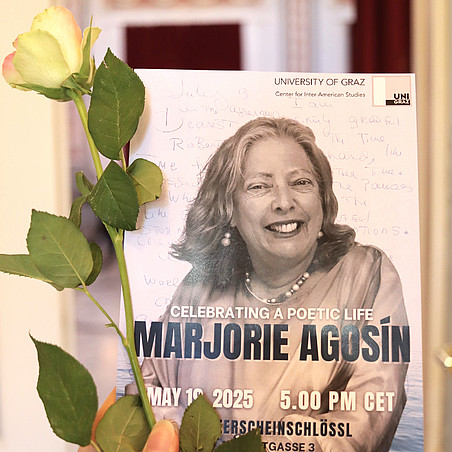
In Memoriam Marjorie Agosín
Celebrating Marjorie Agosín, who left us too early, we want to commemorate the traces she left, acknowledge the lives she touched, and find solace in the memory that is a blessing for all of us who loved and cherished her. Marjorie was reconciled with Austria through the work she did at the Center for Inter-American Studies, her enthusiastic involvement in the Graz International Summer School Seggau, her creative writing workshops in Graz and Seggau, her mentorship to all of us, and especially her constant love and support, always in awareness of the challenges we all face. Now, it is our task to feel this love in our loss, find consolation in the fact that we had the privilege of knowing such a wonderful person, and to come together and in appreciation celebrate a life well lived by asking the question “Where is love born that does not end in sorrow?” Together, in acknowledgement that “the sun changed colors,” we will find our own poetic voices and “perhaps” feel joy and connection: “But sometimes I see her appear in my dreams, / A visionary filled with love / Who kissed my forehead / And asks me not to forget her”. Those of you who would like to share testimonials and pictures, we will set up a platform for you to contribute, which we will post on the website of the Center for Inter-American Studies of the University of Graz, Austria.
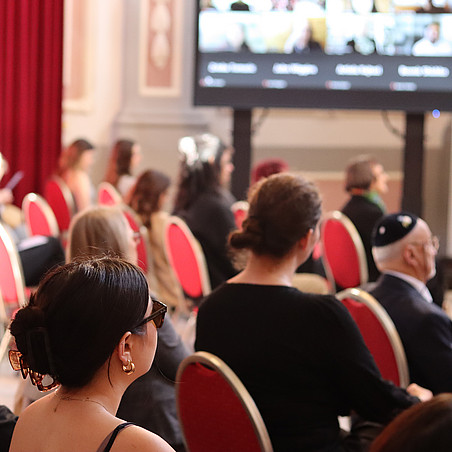
Zoom recording and photos:
Please note that due to technical difficulties, the speeches by Mireille van Poppel (University of Graz), Alex Weitzig (Ambassador of the Republic of Chile to Austria), Ulrike Taberhofer (City of Graz), and Mitch Sims (Fullbright Austria) are not included in this recording. In addition, the music was not registered by the microphones we used.
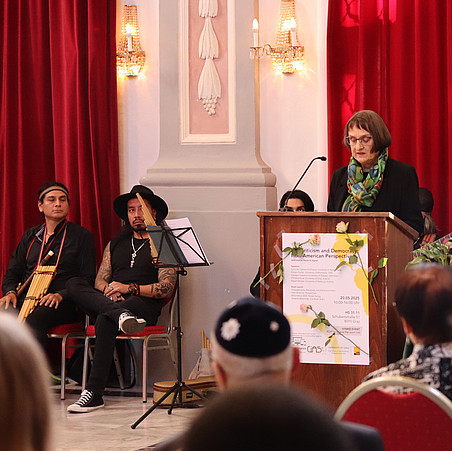
Contributions in order of appearance: John Wiggins, Heinz Anderwald (Jewish Community Graz), Roberta Maierhofer, Kurt Hahn, Erna Pfeiffer, Nina Reibenschuh, and Mirko Petric.
Music by Amaru Sunqu (Grupo Andino Latinoamericano, Perú, Chile, and Mexico)
We thank every contributor and attandee for making this event possible.
To watch the recording of the event, please follow this link and enter the passcode: x9nC+0+7
The photos of the event can be found here.





TRIBUNA 2025
Three days to dive into the Caribbean without leaving Graz
From May 14 to 16, 2025, the Iberoamerican Department in cooperation with the Department for Romance Studies, the Department of Translation Studies, and the Center for Inter-American Studies of the University of Graz hostet the sixth TRIBUNA-festival. Concerts, talks, workshops, theater, exhibitions, children's programm, tasting, dance and an intercultural latinamerican market highlighted the caribbean culture, history, literature, language, and society.
Please find the report on the festival here!